Street Stencil: Capturing Urban Grit in Your Designs
There’s a certain authenticity to the streets that you just can’t fake. It’s the layered history of a concrete wall, the raw energy of a back-alley gig, the unapologetic boldness of a message spray-painted through a steel shield. For designers and creatives looking to bottle that raw, industrial spirit, typography is often the first and most powerful tool. Enter Street Stencil, a typeface that doesn’t just mimic urban texture—it embodies it. This isn’t a clean, polished font; it’s a statement piece, built to convey toughness, authenticity, and an underground edge.
More Than Just a Font: The Anatomy of an Urban Typeface
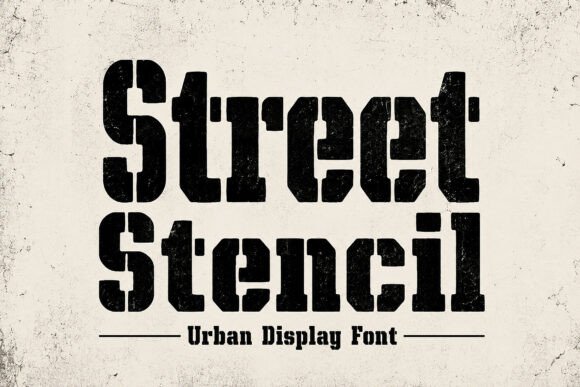
What makes Street Stencil visually compelling is its commitment to realism. The heavy, block-slab letterforms are immediately commanding, but the devil is in the details. The realistic bridge splits—the gaps in the letters that are a hallmark of true stencil work—aren’t just decorative. They’re functional, suggesting the tool that created them. Overlaid on this industrial skeleton is a weathered, distressed stamp texture. This isn’t a simple digital noise filter; it’s a carefully crafted layer that simulates the look of ink bleeding on rough concrete or paint chipping off a metal sign. The result is a font with immense visual weight and tight geometric tracking that remains surprisingly readable, even when placed over complex, gritty backdrops. It’s a premium font designed for impact, not subtlety.
Where the Concrete Hits the Canvas: Real-World Applications
The true test of any creative font is how it performs in the wild. Street Stencil’s personality makes it a standout choice for projects that demand a bold, alternative voice. Its utility spans a wide range of applications, each benefiting from its distinctive character.
For Branding and Logo Design: If your brand identity is rooted in streetwear, skate culture, extreme sports, or industrial craftsmanship, this typeface can become the cornerstone of your visual language. A logo set in Street Stencil immediately communicates a no-nonsense, durable, and culturally aware ethos. It’s perfect for apparel labels, independent record stores, urban exploration blogs, or any brand that wants to project strength and authenticity.
In Print and Packaging: Think beyond digital. This font shines in editorial design for music magazines or alternative culture zines. Use it for striking poster headlines that grab attention from across the room. On packaging, it can lend an artisan, rugged feel to products like craft coffee, vinyl records, or specialty tools. The distressed texture ensures it looks intentional and high-quality, not like a printing error.
Digital Presence and Marketing: Your website’s hero section or a bold blog post title can use Street Stencil to set a powerful tone. For social media graphics, it’s a tool for creating instantly recognizable, shareable content—think event announcements, quote cards, or sale promotions for streetwear brands. In marketing assets like email headers or digital ads, it cuts through the noise of generic sans serif fonts, helping to improve brand recognition and audience engagement through sheer visual distinctiveness.
Practical Guidance for Working with a Display Font
Using a powerful display font like Street Stencil effectively requires a bit of strategy. Its strength is its personality, which means it can dominate a layout if not handled with care.
Purpose and Pairing: The first step is to match the font to your project’s goal. Street Stencil is not for body text; it’s a headline and accent font. Its ideal role is to draw the eye and establish a mood. To create visual consistency and a professional presentation, pair it with a cleaner, highly readable typeface for paragraphs and supporting information. A simple sans serif font or even a classic serif font can provide a perfect counterbalance, allowing the stencil’s character to shine without overwhelming the reader.
Readability Considerations: While the font is designed for clarity, context is key. Use it at larger sizes where its detailed texture can be appreciated. Avoid using it for long passages of small text, where its distressed nature could become a distraction. Test it against various backgrounds—a clean white space will make it pop, while a subtle, textured background can enhance its gritty feel, but ensure there’s enough contrast to maintain legibility.
Leveraging the Full Toolkit: When you acquire a commercial font like this, review all the included styles. It often comes with variations—such as regular, bold, or italic—that offer flexibility within the same aesthetic. Understanding your licensing is also crucial. Ensure you have the correct commercial license for your intended use, whether it’s for a single client project, merchandise for sale, or unlimited digital assets. This protects both you and the font’s creator.
Building an Authentic Visual Language
In a world saturated with polished, homogenized design, a font with genuine texture and history can be a game-changer. Street Stencil offers more than just letters; it offers a vibe, a story, and a connection to a specific aesthetic. It’s a tool for creators who want their designs to feel lived-in, real, and unapologetically bold. By understanding its strengths and applying it thoughtfully, you can transform a standard layout into a compelling piece of visual communication that resonates with an audience looking for something real. It’s not just about making text look cool—it’s about embedding a piece of the street into the very fabric of your brand.