Tranquile: A Serif Font That Feels Like a Vintage Editorial
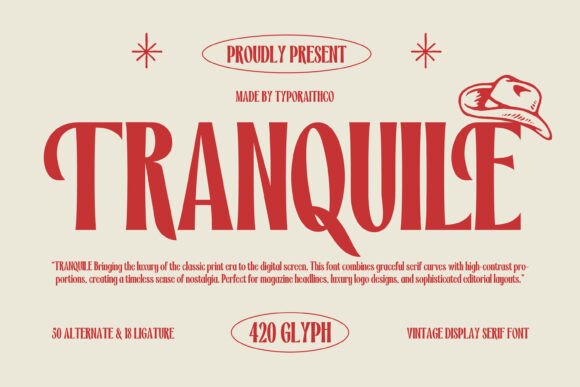
There’s a particular kind of typography that doesn’t just sit on the page—it sets a mood. It whispers of heritage, quality, and a certain unhurried elegance. If you’ve ever admired the mastheads of classic magazines or the branding of a high-end artisan product, you know the feeling. Tranquile is a vintage display serif font designed to evoke exactly that sensation, offering a bridge between timeless print aesthetics and contemporary design needs.
At its core, Tranquile is built on high-contrast letterforms, the kind where thick and thin strokes play off each other to create visual rhythm and sophistication. The curves are stylish, not stiff, and the vintage details are refined rather than kitschy. It’s the typographic equivalent of a beautifully tailored suit or a leather-bound book—immediately recognizable as premium. This isn’t a font that shouts; it speaks with confident clarity, making it a powerful tool for anyone looking to inject a luxurious, nostalgic feel into their work.
Beyond the Headline: Where Tranquile Truly Shines
While a font like this naturally catches the eye in large, dramatic settings, its real value lies in its versatility across a wide range of projects. Think of it as a foundational design asset that can elevate multiple facets of your brand or creative output.
For branding and logo design, Tranquile’s elegant letterforms help establish an immediate sense of tradition, quality, and sophistication. It’s particularly effective for businesses in the luxury goods, fashion, boutique hospitality, or artisanal food spaces where heritage and craftsmanship are part of the story. The included alternates and ligatures allow you to create a truly unique wordmark, avoiding a generic look.
In packaging design, a premium serif font like Tranquile can make a product stand out on the shelf. It communicates value before the customer even reads a single descriptor. Imagine it on a label for small-batch spirits, gourmet chocolates, or organic skincare—it instantly adds a layer of perceived quality and intentionality.
For editorial layouts and magazines, it’s a natural fit. Use it for striking pull quotes, chapter headings in a lookbook, or the title of a feature article. Its high contrast ensures it remains legible and impactful even at smaller sizes in a busy layout, while its character adds depth to the page.
Integrating a Classic Typeface into Modern Projects
Using a vintage-inspired display font in a digital-first world requires a thoughtful approach. The goal is to harness its nostalgic charm without sacrificing modern functionality, especially for social media graphics, websites, and digital products.
A key piece of advice is to pair it wisely. Tranquile has a strong personality, so it often works best as a headline or accent font. For body text on a website or in a lengthy document, pair it with a clean, highly readable sans serif font. This contrast creates a clear visual hierarchy: the serif font draws the eye and establishes tone, while the sans serif handles the heavy lifting of body copy without causing fatigue.
Readability considerations are paramount. While Tranquile is designed for display, always test it at the size and in the context it will be used. A beautifully crafted script or serif can become illegible if used too small or on a low-contrast background. For social media graphics, ensure the text over images has sufficient contrast. For web use, consider using it primarily for static headings rather than dynamic, user-generated content where font rendering can vary.
Take advantage of the stylistic alternates and ligatures. These features are what separate a good design from a great one. Swap out a standard ‘a’ or ‘g’ for an alternate version to change the texture of your headline. Enable ligatures to ensure combinations like ‘fi’ or ‘fl’ connect seamlessly, which not only looks more polished but can also improve spacing and flow in certain applications.
From Concept to Final Asset: Practical Considerations
Before committing to any font for a commercial project, a few practical steps will ensure a smooth process. First, review the full character set and styles provided. Does it include the weights you need? Are the alternates and ligatures easily accessible? Understanding what’s in the package helps you plan your typography system effectively.
Next, test it thoroughly. Don’t just look at it in a design tool’s preview. Render it as it will be seen: in a mockup of a business card, on a simulated website header, in a social media post template. Check the spacing, kerning, and overall feel in context.
Finally, understand the licensing. A font is a critical piece of your project’s infrastructure. Ensure the license covers your intended use, whether it’s for a single client project, a line of merchandise, or a global digital product. A clear commercial license, like the one typically offered with premium fonts, provides peace of mind and legal clarity, allowing you to use Tranquile confidently in your logo designs, marketing assets, and print materials without future complications.
Choosing the right typography is about matching visual language to intent. Tranquile offers a specific voice—one of refined elegance and nostalgic appeal. For projects where that voice aligns with your goals, it can become more than just a font; it becomes a central character in your brand’s visual story, helping to build recognition, convey professionalism, and engage your audience on an aesthetic level that feels both timeless and intentional.