Berico: A Serif Font That Balances Luxury with Modern Edge
There's a particular moment in every design project where you realize the typeface you've chosen isn't just holding words—it's shaping the entire mood of the piece. That realization hits especially hard when you're working on something that needs to feel elevated but not stuffy, luxurious but still approachable. Berico is the kind of font that lives in that sweet spot, and once you start using it, you'll understand why designers keep reaching for it when the brief calls for something special.
Where Classic Meets Contemporary
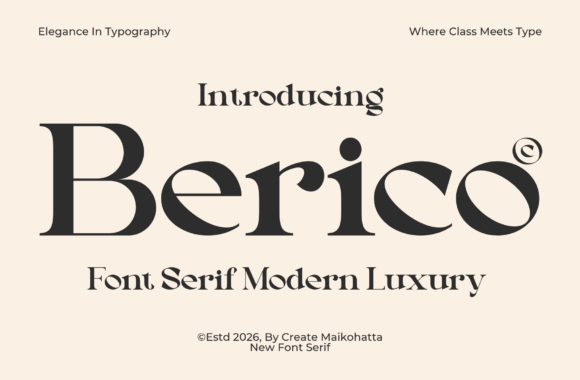
Berico draws from the long tradition of serif typography—the kind of letterforms you'd see carved into old stone or pressed into the pages of leather-bound books. But it doesn't stay there. The designers behind this typeface gave it high-contrast strokes and curves that feel unmistakably current. Think of it like a beautifully tailored blazer: the silhouette is timeless, but the cut and fabric choices tell you it was made this season.
What makes Berico visually compelling is how it handles proportion. The thick and thin strokes create a rhythm across a line of text that catches the eye without overwhelming it. The serifs themselves are refined—present enough to give the letters structure, but subtle enough that the overall look stays clean. If you've ever struggled with traditional serifs feeling too heavy or dated for modern projects, Berico solves that problem elegantly.
Real Projects Where This Typeface Shines
Let's talk about where Berico actually works in practice, because a font can look beautiful in a specimen sheet and fall flat in a real layout. This typeface holds up remarkably well across a range of applications, and that versatility is part of its value.
Fashion and beauty branding is an obvious starting point. The letterforms have a natural grace that pairs well with cosmetics, skincare, fragrance, and apparel. Picture it on a minimalist perfume box or embossed on a clothing label—it carries that quiet confidence luxury brands need.
Magazine and editorial design is another strong fit. Berico works beautifully as a headline font for spreads that need drama without chaos. The high contrast means it commands attention at larger sizes, while still feeling sophisticated enough for a lifestyle or culture publication.
Wedding invitations and event stationery benefit from its romantic yet polished character. It avoids the overly decorative look that can make some script fonts feel dated, while still delivering the elegance couples expect for formal occasions.
Social media templates are where many premium fonts stumble, but Berico adapts well to digital constraints. Its letterforms stay legible at smaller sizes on screens, and the personality comes through even in a quick Instagram story or Pinterest pin. If you're building a brand presence online, consistency across platforms matters—and this typeface maintains its character whether it's on a billboard or a phone screen.
Packaging design is another arena where Berico excels. Whether you're designing labels for a small-batch candle brand or creating the visual identity for a gourmet food line, the font communicates quality before a customer even reads the product name. That first impression on a shelf—or a product page—can make the difference between a scroll-past and a sale.
Making Your Brand Feel Cohesive
One of the most overlooked aspects of building a brand identity is typographic consistency. You can have a gorgeous logo and a perfect color palette, but if your typography is all over the place—mixing random fonts across your website, packaging, and social feeds—the whole thing feels disjointed. Berico gives you a strong anchor point. Its personality is distinctive enough to be recognizable, but flexible enough to work across different contexts without feeling repetitive.
Think about the brands you admire. Chances are, they use typography deliberately. The font on their website matches the feeling of their packaging, which matches their social media presence. That kind of visual thread builds trust with your audience, even when they don't consciously notice it. Berico makes that consistency easier to achieve because it carries the same refined tone whether it's set at 72 points on a poster or 14 points on a product description.
Pairing Berico with Other Fonts
No font works entirely alone, and knowing how to pair typefaces is a skill that separates good design from great design. Berico's serif structure makes it a natural companion for clean sans serif fonts. A geometric sans serif in a lighter weight can create a beautiful contrast for body text, letting Berico own the headlines while the supporting font handles longer paragraphs.
Script and handwritten fonts can also work alongside Berico, though the key is restraint. Use a flowing script for a single accent phrase—like a tagline or a call-to-action—and let Berico carry the rest of the typographic weight. Too many decorative fonts competing for attention creates visual noise rather than visual interest.
The best approach is to test your pairings in context. Don't just line up fonts side by side in a design file. Drop them into an actual layout—a mockup of your business card, a draft of your Instagram post, a rough version of your website header. Seeing how the fonts interact with real content, white space, and imagery tells you far more than any font specimen ever will.
Readability Isn't Optional
Here's something that gets lost in the excitement of finding a beautiful typeface: if people can't read it easily, it doesn't matter how pretty it is. Berico performs well in this regard, but it's still worth thinking carefully about context. At headline sizes, its dramatic contrasts are stunning. At very small sizes on low-resolution screens, those same contrasts can become a liability. This is true of most high-contrast serifs—it's not a flaw, it's a design characteristic you need to account for.
For body text on websites or in long-form documents, consider pairing Berico with a more neutral sans serif that's optimized for extended reading. Let Berico handle the moments that matter—the title, the pull quote, the product name—and use a workhorse font for the supporting text. This approach gives you the best of both worlds: visual distinction where it counts and comfortable readability where it matters most.
Understanding What You're Getting
Before committing to any font for a project, take a close look at what's included in the package. Berico typically comes with multiple weights and styles, which gives you flexibility to create hierarchy within your designs without introducing a second typeface. Check whether it includes alternates, ligatures, or stylistic sets—these small details can add polish to logos and headlines in ways that standard letterforms can't.
Also pay attention to language support. If your brand communicates in multiple languages or uses special characters, verify that the font covers those needs. Nothing derails a project faster than discovering mid-design that your typeface can't render a critical character.
Licensing and the Business Side
This part isn't glamorous, but it matters. If you're using Berico for a commercial project—whether that's a client's brand identity, your own product packaging, or templates you plan to sell—make sure your license covers that use. Font licensing can be confusing, and the terms vary between foundries and marketplaces. Desktop licenses, web licenses, and app licenses are often separate, and using a font outside the scope of your license can create legal headaches down the road.
Take five minutes to read the license agreement before you download. It's a small investment of time that protects you and respects the work of the type designers who created the font. If you're unsure whether your intended use is covered, reach out to the seller or foundry—most are happy to clarify.
Bringing It All Together
Choosing a typeface is one of those decisions that quietly shapes everything else in a design project. Berico offers a particular combination of classic serif structure and modern refinement that's hard to find in a single package. It won't be the right fit for every project—a playful children's brand or a rugged outdoor company probably needs something else entirely. But for projects that call for sophistication, elegance, and a touch of contemporary edge, it's a typeface that delivers consistently.
The real test of any font isn't how it looks in isolation. It's how it performs when it meets your actual content, your real audience, and the practical constraints of your project. Download it, test it in your layouts, see how it feels alongside your brand's other visual elements. Typography is a conversation between the designer and the viewer—make sure the voice you choose is saying what you want it to say.