Albatross: A Typeface That Sails With Heritage and Craft
There’s a certain weight to the past—a texture you can almost feel in the grain of old paper, the patina on brass fittings, or the intricate lettering on a vintage apothecary bottle. Capturing that feeling in a modern design project is a challenge, but it’s one that a font like Albatross meets with remarkable grace. This isn’t just a collection of letters; it’s a vessel for a specific, evocative story, one that speaks of maritime voyages, artisanal pride, and the enduring elegance of late 19th-century craftsmanship.
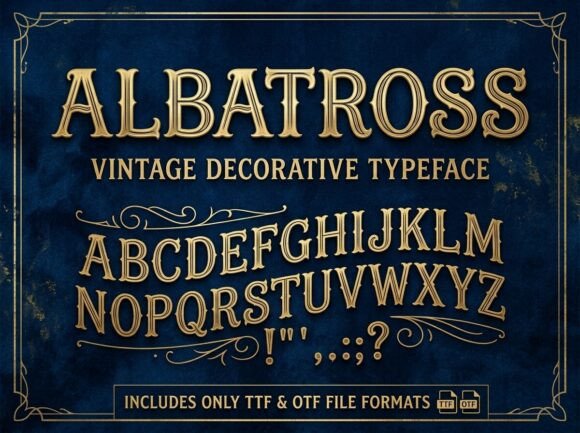
At its heart, Albatross is a premium display typeface defined by its high-contrast, engraved aesthetic. Think of the delicate, inline detailing and the classic spurred serifs that give each character a sense of depth and dimension. The graceful ornamental flourishes aren’t mere decoration; they are integral to its character, evoking a "Victorian-luxe" soul that feels both opulent and authentic. It’s this unique personality that makes it far more than just another serif font—it’s a design asset with a distinct point of view.
Where Heritage Meets Modern Branding
For a small business owner or entrepreneur, choosing a typeface is a foundational branding decision. It’s the visual voice of your company. Albatross excels in scenarios where you want to communicate premium quality, tradition, and a handcrafted ethos. Imagine it on the label of a small-batch gin, the logo for an independent watchmaker, or the masthead of a luxury travel journal. Its intricate details command attention, making it perfect for high-impact applications where the text is a centerpiece, not just a supporting player.
This font’s strength lies in its ability to build immediate brand recognition. When used consistently, its unique silhouette and ornamental character become synonymous with your brand’s identity. It tells customers, before they even read a word, that they’re looking at something considered, crafted, and of a certain caliber. However, its very detail is also its primary consideration: readability at small sizes. Albatross is a display font, designed for headlines, logos, and large-scale typography. Using it for body copy on a website or in a dense paragraph would likely sacrifice legibility for style. The practical approach is to pair it with a clean, highly readable sans-serif or a simpler serif for supporting text, creating a balanced and functional typographic hierarchy.
Practical Applications Across Media
The versatility of a font like Albatross is best seen through the lens of specific projects. It’s a tool with a specialized purpose, and knowing where to deploy it is key to its success.
In Packaging and Print: This is where Albatross truly shines. Think of high-end product packaging for spirits, gourmet foods, or artisanal cosmetics. The engraved look translates beautifully to foil stamping, embossing, or letterpress printing, adding a tactile dimension that digital screens can’t replicate. It’s equally at home on wedding invitations, certificate borders, or the cover of a historical fiction novel, instantly setting a sophisticated, period-appropriate tone.
For Digital Presence and Marketing: While not for body text, Albatross can powerfully anchor your digital brand assets. Use it for your website’s main headline, the title of your hero section, or a key call-to-action that needs to stand out. On social media, it’s ideal for creating stunning quote graphics, promotional banners for a new product launch, or the title card for a video series. It adds a layer of seriousness and artistry to your feed that generic fonts cannot match. For entrepreneurs creating digital products, like an online course or an ebook, using Albatross for the cover and chapter titles can significantly elevate the perceived value and professional presentation.
Making It Work: Pairing and Licensing
Successfully integrating a character-rich font like Albatross into your work requires a thoughtful strategy. The goal is to let its personality shine without overwhelming the viewer or compromising the functionality of your design.
First, always test your font pairings. A bold, ornate serif like Albatross needs a counterpoint. Try pairing it with a geometric sans-serif for a clean, modern contrast, or with a simple, sturdy serif for a more classic but still readable combination. The key is contrast in weight and complexity. Your pairing font should be the workhorse, handling all the functional text, while Albatross handles the celebratory moments.
Second, review the full font family. Does it come with multiple weights (like Regular, Bold, or Inline styles) or alternate characters? Having these options gives you creative flexibility to create emphasis and variety within your headline typography while maintaining a consistent feel.
Finally, and crucially, understand the licensing. Albatross is a commercial font, designed for professional use. Before using it in a client project, on merchandise for sale, or in a widespread marketing campaign, ensure you have the correct license that covers your intended use. This is a non-negotiable step in professional practice, protecting both you as the creator and the original type designer. Investing in a proper license is part of investing in your brand’s integrity.
Choosing a typeface like Albatross is a deliberate choice to tell a richer story. It’s for the designer who sees typography not just as a system of communication, but as an atmosphere, a history, and a feeling. When applied with intention and paired wisely, it doesn’t just label a brand—it gives it a soul.