Penny Scribbles: Capturing Childhood Whimsy in Modern Design
There is a specific kind of joy found in a child’s handwriting—that unapologetic, messy, and utterly honest scrawl that adults spend years trying to "correct." Yet, for designers and brand strategists, that raw authenticity is pure gold. Enter Penny Scribbles, a handwritten font family that bridges the gap between the chaotic energy of a child’s notebook and the polished demands of modern graphic design. It isn’t just a typeface; it is a deliberate choice to infuse warmth, personality, and a touch of nostalgia into a project. If you have been searching for a way to make your brand feel more approachable without sacrificing legibility, this typeface might just be the missing puzzle piece in your design toolkit.
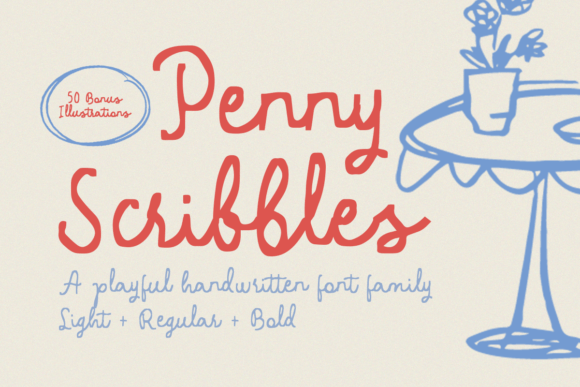
At its core, Penny Scribbles is defined by its playful, messy strokes. It mimics the irregular baselines and varying pressure found in natural handwriting, yet it possesses a modern structure that ensures it doesn’t look out of place on a professional website or a high-end product label. The beauty of this font lies in its imperfections. In a digital landscape saturated with sterile, geometric sans-serifs, a typeface like this creates an immediate emotional connection. It tells the viewer that there is a human behind the brand, one who values creativity and authenticity over rigid conformity. Whether you are designing a logo for a boutique bakery or laying out a newsletter for a community center, the visual texture of Penny Scribbles adds a layer of tactile reality to the screen.
Practical Applications: Beyond the Doodle
One of the most common pitfalls in using handwritten fonts is assuming they are only suitable for "cute" projects. While Penny Scribbles certainly excels in whimsical contexts—think children’s book covers or party invitations—its versatility extends far beyond that. Consider the food and beverage industry. Menus are notorious for being difficult to read, often due to overly ornate scripts. Penny Scribbles offers a solution: it retains the cozy, artisanal vibe of a handwritten menu but with the clarity needed for customers to actually order their meal. It works beautifully for recipe cards, where that "grandma’s kitchen" feel is essential, or for packaging artisanal goods where you want to emphasize the handmade nature of the product.
For content creators and bloggers, this font is a powerful tool for establishing a distinct voice. If your blog focuses on DIY crafts, parenting, or lifestyle, using a handwritten font for your headers can instantly set the tone. It signals to the reader that the content is personal and relatable. Furthermore, in the realm of social media graphics, standing out is everything. A quote overlay on an Instagram image or a bold statement on a Pinterest pin becomes significantly more engaging when set in a typeface that feels like a personal note rather than a corporate memo. It breaks the scroll by offering a visual "breather" that feels organic and human.
The Bonus Asset: 50 Unique Illustrations
What elevates Penny Scribbles from a standard premium font to a comprehensive design system is the inclusion of 50 unique illustrations. This is a game-changer for those who struggle with sourcing complementary visual assets. Often, finding illustrations that match the specific line weight and personality of a font is a tedious process involving multiple stock sites and endless tweaking. Here, the heavy lifting is done for you.
Provided in both SVG and PNG formats, these assets offer immense flexibility. The SVG (Scalable Vector Graphics) files are perfect for web design and large-format printing because they can be scaled to any size without losing quality. You can change the colors of the vectors to match your specific brand palette in seconds. The PNG files, typically featuring transparent backgrounds, are ready to be dragged and dropped into your workflow—ideal for quick social media edits or PowerPoint presentations. Imagine designing a "Coming Soon" page for a new product launch; you can pair the Penny Scribbles header text with these doodles to create a cohesive, playful aesthetic in minutes. This integration ensures visual consistency, a key component of strong brand identity, as your typography and imagery will share the same DNA.
Strategic Typography: Matching Font to Goal
Choosing the right font is less about personal preference and more about strategic alignment. Before integrating Penny Scribbles into your next project, it is vital to analyze your project goals. As a display font, it shines brightest in headlines, sub-headers, and callouts. It is designed to grab attention. However, using a handwritten font for long-form body copy (the main paragraphs of text) is generally discouraged. While Penny Scribbles is legible for a script font, the human eye is trained to read serif and sans-serif fonts in dense blocks of text.
Therefore, the best practice is pairing. A successful font pairing relies on contrast. Because Penny Scribbles is organic and irregular, it pairs exceptionally well with clean, geometric sans-serif fonts or traditional serif fonts. For example, using a clean sans-serif for your body text provides a neutral canvas that allows the Penny Scribbles headers to pop without causing visual fatigue. This combination allows you to maintain a professional presentation while still showcasing your brand's creative flair. It is about balance—letting the handwritten font do the heavy lifting for emotional impact while relying on standard typography for readability and information delivery.
Commercial Considerations and Licensing
For entrepreneurs and small business owners, the legal aspect of design assets is just as important as the aesthetic one. When investing in a commercial font, you must understand the licensing terms. Penny Scribbles is offered as a commercial font, meaning you are typically purchasing the right to use it in projects that generate revenue. This includes merchandise like t-shirts or mugs, client work, and marketing materials.
However, it is always best practice to review the specific End User License Agreement (EULA) provided with your download. Some licenses restrict the number of "seats" (computers the font can be installed on) or prohibit the use of the font in "editable" templates for resale. Understanding these nuances protects your business legally and ensures you are respecting the intellectual property of the type designer. By treating typography as a professional asset rather than a disposable commodity, you uphold the integrity of your own brand.
Visual Consistency and Brand Recognition
Brand recognition is built on repetition and consistency. When a customer sees your marketing materials, they should be able to identify your brand within seconds. Typography plays a massive role in this. If your website uses one style of font, your invoices use another, and your social media uses a third, you create a disjointed experience that confuses your audience.
Adopting Penny Scribbles as part of your brand typography kit allows you to inject personality across various touchpoints. Whether it is a handwritten "Thank You" note printed on packaging inserts or a whimsical header on your monthly newsletter, the consistent use of this font reinforces your brand voice. It creates a thread that ties your digital presence to your physical products. This consistency builds trust. When a design feels cohesive, the business behind it feels more organized, reliable, and trustworthy.
Ultimately, Penny Scribbles offers more than just letters on a screen; it offers a mood. It provides a way to communicate warmth, creativity, and approachability in a world that often feels overly digital. By pairing this playful typeface with the included vector illustrations and adhering to solid design principles, you can create assets that not only look good but also effectively communicate your brand’s unique story. Whether you are a seasoned graphic designer looking for a fresh display font or a small business owner trying to DIY your own branding, this font family provides the tools to make your vision a reality. It is a reminder that sometimes, the best designs are the ones that don't take themselves too seriously.