Affection: The Calligraphy Font with Effortless Charm
There’s a particular quality in typography that goes beyond mere legibility. It’s the feeling a typeface conveys before a single word is fully processed. Some fonts announce themselves with bold authority, while others whisper with understated elegance. Then there are those that simply feel like a warm, familiar gesture—a font that doesn’t just display letters but communicates a mood. This is the space where Affection resides, a calligraphy font that blends charm and style into a cohesive visual language. Its effortless swashes and simple yet captivating letterforms create a laid-back aesthetic that naturally draws the eye, making it a versatile tool for a wide array of creative and commercial projects.
Understanding the Font's Visual Personality
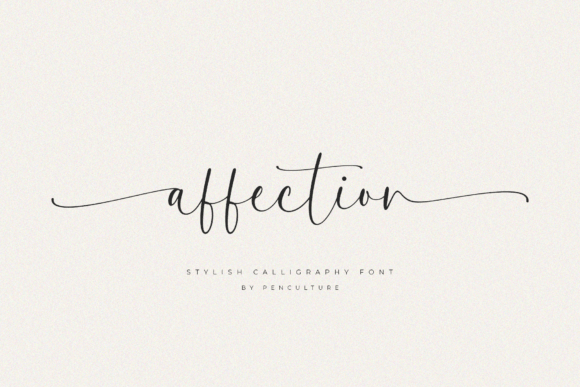
Affection is best described as a script font with a distinctly modern, handwritten feel. Unlike overly formal or rigid calligraphy styles, it avoids unnecessary complexity. The letterforms are clean and readable, but the defining characteristic is the way the swashes and connecting strokes flow. They aren’t excessive or decorative for the sake of it; instead, they add a subtle rhythm and movement to the text. This gives the font a relaxed, approachable personality. It feels personal, as if crafted by hand, which can inject authenticity into a design. The charm lies in its simplicity—it’s stylish without trying too hard, making it an excellent choice for projects that need to feel both polished and genuine.
Where This Typeface Truly Shines: Practical Applications
The real value of a premium font like Affection is measured by its utility. Its character makes it particularly effective in contexts where a personal touch or emotional resonance is key.
- Invitations and Stationery: This is a natural home for Affection. For wedding invitation suites, save-the-dates, or party announcements, the font sets a celebratory and intimate tone. It can also elevate thank-you cards, personalized notes, and boutique stationery.
- Branding and Logo Design: For businesses in the lifestyle, beauty, artisan food, or boutique retail sectors, Affection can form the core of a brand identity. A logo design using this font immediately communicates approachability and craftsmanship. Think of a small-batch skincare line, a local florist, or a specialty coffee shop—the font aligns with their story.
- Packaging Design: On product labels, boxes, or tags, Affection adds a layer of perceived care and quality. It works beautifully for product names, taglines, or special callouts, making the unboxing experience feel more curated.
- Digital Presence: In the realm of social media graphics, the font is a powerful asset. It can create eye-catching quotes, highlight announcements, or add personality to Instagram Stories and Pinterest pins. For web design, it’s ideal for hero sections, call-to-action buttons, or blog headers where a touch of flair is needed without sacrificing overall site readability.
- Marketing and Editorial: Affection can bring life to marketing assets like flyers, posters, and promotional banners. In editorial design, such as magazine layouts or lookbooks, it serves as a compelling display font for headlines or pull quotes, breaking the monotony of body text.
- Merchandise and Printables: The font translates well to physical goods. Consider tote bags, mugs, t-shirts, or art prints. For digital creators, it’s perfect for designing planners, worksheets, or social media templates for sale.
Making the Right Typographic Choice for Your Project
Choosing a font is a strategic decision. The goal isn’t to find the most beautiful typeface in isolation, but the one that best serves your project’s communication goals. Here’s how to approach it practically.
First, define the mood you need to evoke. Is it formal, playful, trustworthy, luxurious, or casual? Affection leans toward the friendly, elegant, and personal end of that spectrum. If your project demands stark minimalism or corporate seriousness, a clean sans serif font might be a better primary choice, with Affection used sparingly for accents.
Second, consider the context of use. A font that looks stunning in a large headline may become illegible at small sizes or on low-resolution screens. Always test Affection at the size it will actually appear in your final design. Check its performance on both a desktop monitor and a mobile phone screen for digital projects.
Third, think about pairing. A script font like Affection rarely works well as the sole font for lengthy text. Its strength is in display and accent roles. Pair it with a stable, highly readable serif font or sans serif font for body copy. For example, use Affection for a main headline and pair it with a font like Lato or Open Sans for descriptive text. This contrast creates visual hierarchy and ensures your message is both beautiful and clear.
Integrating Affection into Your Design Workflow
Once you’ve decided to use a font like Affection, a few practical steps will ensure a smooth integration into your work.
Always review the full character set and included styles. Many premium fonts include alternate characters, ligatures, and multiple swash options. Exploring these features allows you to customize the look further, avoiding a generic appearance. For instance, you might swap out a standard letter “g” for a more stylistic alternate to better fit your layout.
Pay close attention to spacing and kerning. Calligraphy fonts often have unique spacing between letters due to their connecting strokes. After typing your text, take a moment to adjust the letter spacing (tracking) and the space between specific character pairs (kerning) to achieve a balanced, professional look.
Finally, don’t overlook licensing. If you’re using the font for a commercial project—whether it’s a client’s logo, a product you sell, or marketing materials for your business—ensure you have the correct commercial font license. Reputable font marketplaces provide clear licensing information. Using a font within its license terms is not only legally necessary but also supports the type designers who create these valuable design assets.
Bringing It All Together
A font is more than a set of characters; it’s a voice. Affection offers a specific, compelling voice—one that is charming, stylish, and effortlessly engaging. Its practical applications are broad, spanning from tangible print materials to dynamic digital spaces. The key to using it effectively lies in matching its personality to your project’s needs, pairing it thoughtfully for readability, and integrating it with care. By viewing typography as a functional element of your visual strategy, you can leverage fonts like Affection not just to decorate, but to communicate more effectively, build recognition, and create a cohesive experience that resonates with your audience.